.
When circadian lighting was originally introduced to the architectural lighting sector, it was all about making sure that office workers/ school children/control centre shift workers/etc got decent exposure to blue-rich light (mimicking daylight, as it were) to ensure that their alertness wasn’t being compromised by sub-optimal environmental illumination. Everything was built around the discovery of non-visual receptors in the eye (the ipRGCs, or ‘intrinsically photosensitive Retinal Ganglion Cells’ to give them their full title). The quality and quantity of blue-rich light determined the production of melatonin, which become known as a the ‘sleep hormone’.
But it was never going to be that simple.
We called it ‘human centric lighting’ and, for a time, it became something to talk about – until the sales figures for HCL lighting proved to be consistently disappointing and the conversation slowly died away. At least, it did in the lighting manufacturing industry; but things were shifting in scientific research which, linked to the development of lighting design for health and wellbeing, circadian lighting is due a comeback.
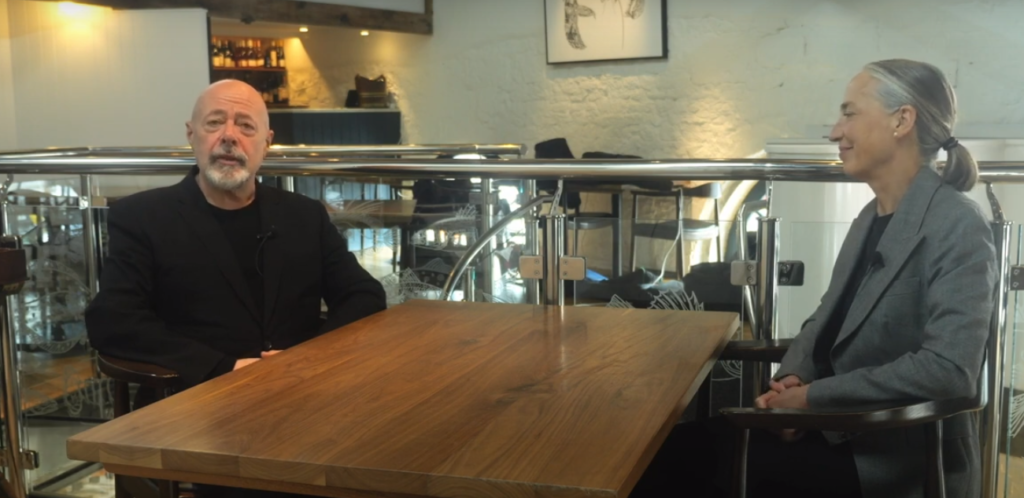
This podcast conversation, between John Bullock and Dr. Shelley James (principals of LightCycles:HOME), came about as a consequence of a symposium arranged by Shelley earlier this year, at the Oxford base of Prof. Russell Foster and his Circadian Neuroscience team. We’re talking about how lighting design considerations need to change in view of the latest research, which has revealed that there’s more to circadian entrainment than the ipRGC!
.