When in doubt, listen to the Greeks; they knew stuff. And for an insight into where lighting and health is at the moment, I’ll stand by Socrates as he said: “the more I know, the more I realise I know nothing.”
Or as an alternative, here’s Peter Benchley: “ Just when you thought it was safe to go back in the water”.
The scientific thinking around circadian entrainment and the sleep-wake cycle – and how lighting can influence work with that – is gaining good traction; we’re seeing working models based on the latest research and long-term studies are underway. You can see what we have to say about that at Lightcycles:HOME where Shelley James and I are putting scientific research and hard technology together to make working environments.
And then Deborah Burnett , my good friend in California, tugged at my sleeve to say that ‘there’s something we really need to talk about’. Deborah has had her finger on the pulse of lighting and health for years, so it’s generally a good idea to pay attention when something new comes along.
.

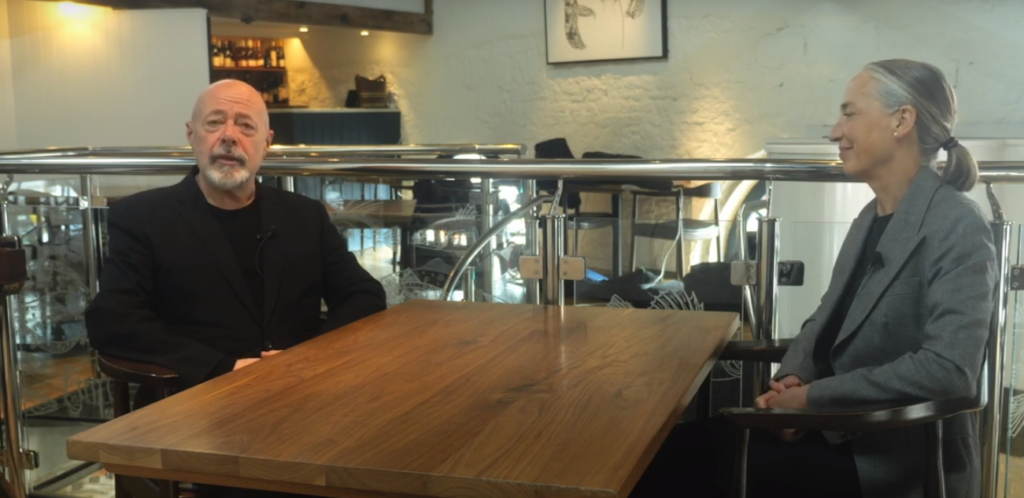
.And so we move swiftly from a video podcast on a topic that most of hadn’t even realised was a topic to a roundtable session at University College London (UCL) that brought together researchers and the real-world specifiers to find out just what’s going on.
There’s a reason for this: we probably lost a decade in the development of a functioning circadian lighting system because we – lighting creators of all stripes, designers, engineers, manufacturers – didn’t engage properly with the research. We took the morsels that fell from the scientific table and tried to make a feast. It was a strategy doomed to fail, which is exactly what happened. Human Centric Lighting became a discredited idea and was quietly dropped from the conversation. We decided that this shouldn’t happen this time around; if our need for Infra-Red within the interior built environment is so urgent, the find out what we can do NOW.
What are we talking about? Let’s have a quick resumé.
Inside our bodies – inside every living creatures body. Come to that – is a host of mitochondria.
Def: mitochondria are sub-cellular structures that exist inside cells, in a similar way, perhaps, that our organs exist inside our bodies. They keep us alive.

The mitochondria within our cells provide the energy that feeds the cells and keeps them healthy and active. The chemical energy produced by the mitochondria is stored in a small molecule called adenosine triphosphate (ATP).
Def: Adenosine triphosphate is a nucleotide that performs various cellular functions, including the supply of energy required for the muscle contraction, circulation of blood, locomotion and various body movements.
But if mitochondria isn’t fed, then the energy distribution around the body begins to collapse, with potentially disastrous results. Mitochondria are central to the maintenance of life and the gatekeepers of cell death. This is serious.
For billions of years every living organism has relied on the infra-red radiation of the sun (our sole source of energy for life) to feed the mitochondria within our bodies. All we have to do is go outside and walk about.
Def: Infra-red radiation also known as thermal radiation. It is that band in the electromagnetic radiation spectrum with wavelengths above red visible light between 780 nm and 1 mm, beyond which it disappears into radio waves.
For our purposes, we’re looking at Near Infra Red (NIR) and most particularly, radiation at 850nm which we’re describing (probably inaccurately as far as the scientists are concerned) as Mitochondrial Infra Red. But we have to call it something.
Back to our round table.
Representing the science we were lucky enough to have
- Prof. Glen Jeffery, Professor of Neuroscience. Institute of Ophthalmology. Faculty of Brain Sciences.
- Jemima Unwin, Programme Leader MSc Light and Lighting at UCL,
- Cosmin Ticleanu, Head of Lighting at BRE, and Lecturer (Teaching) at UCL (Barlett)
And, though in absentia
- Robert Fosbury Hon. Prof. UCL Institute of Ophthalmology Emeritus Astronomer at the European Southern Observatory
And for the lighting community we had
- Colin Ball, Lighting Director at BDP
- Ruth Kelly-Waskett, Project Director at Hoare Lea
- Howard Lawrence, Director at Commercial Lighting Systems
And holding the ring, we were:
- Dr. Shelley James, light and health consultant
- John Bullock, lighting designer and publisher
The headline topics covered in the session included:
Is this a real issue?
And there is no doubt in anyone’s mind that we have a problem. Its reckoned that, in the developed world (a misnomer if ever there was one) we spend 80 – 90% of our lives indoors, away from that most health-supporting solar radiation, and exacerbated in many of our buildings by IR-filtering glazing in order to reduce the inevitable cooling load that would be needed if solar radiation was allowed to infiltrate with impunity.
We are now using the first artificial light source that has NO infra-red radiation in it. Even fluorescent lamps emit a level of infra-red. Tungsten and halogen lamps, as we know, emit around 90% of the energy as Infra-red. But LEDs have been designed specifically to cut off light emission towards the end of the visible red portion of the spectrum in the search for energy efficiency. The argument being that, if you can’t see it then wny spend money on it. In deep-plan buildings and buildings where occupants have little or no access to natural light, this lack of infra-red exposure is a potential health hazard.
Have we ever seen anything like this before? The most obvious example I can think of was the risk of scurvy among the crews of sailing ships before science linked the condition to a Vitamin C deficiency. Without that vital component in the diet physical effects included general fatigue and sore arms and legs, which led to gum disease and bleeding from the skin – and all due to decreased red blood cells. As scurvy worsened, wounds wouldn’t heal, personalities changed, leading to death from infection or blood loss. It is reckoned that, on major voyages, up to half of the crew could die of the condition. The simple treatment, adding citrus fruit, was first demonstrated in 1973. It took another forty years before the Royal Navy routinely gave lemon juice to sailors.
Forty years of sustained pain and physical damage, caused by wilful ignorance. We’ve been using LEDs as the major source of articifial illumination for less than half of that time.
How should mitochondrial Infra-red be delivered?

There are two ways of delivering therapeutic interventions of MIR.
Firstly, and what this meeting was all about, there is a desire to find a way of re-introducing infra-red light into environmental lighting, either via specific IR radiators or within luminaires. Its acknowledged that the IR component would need to be outside of the visible range (670nm is a common frequency for delivering IR treatments, but that is very much within the visible range and aesthetically difficult to incorporate into the visual field.
There is also a specific medical alternative where subjects (people like you and me) are subject to a specific dose of MIR for a certain period, from a dedicated radiation panel. This brings with it the issue of access to the treatment, the time that it takes and the regularity – for subjects that are not presenting any obvious condition related to insufficient infra red radiation.The environmental route towards MIR introduction offers us a similar opportunity to that of having fluoride in our water supply, rather than deliberately ingesting it. The general availability of potable water within our society makes that unseen intervention a far more successful route to health.
How much do we need and for how long?
Its at this point that we all look at one another and compare lengths of string. Using the fluoride-in-water analogy, providing there is no issue with overdosing, a constant delivery of MIR from luminaires would seem to be the way forward – but someone (please!) needs to tell us what that delivery amount needs to be.We can produce luminaires where the MIR is a separate switch-line and that would enable timed exposure, which suggests a stronger dose, but humans being the wayward and wanton creatures that we are, we’ll probably decide to get out of the building during those times – out of sheer cussedness.
Can we imagine real-life trials taking place soon?
This is the thing that circadian researchers are still calling for. Exposure of theories and principles to the real world has to be the benchmark for future development. Building (and people) managers will need assurance of two things:
- That no damage can be done
- That sufficient radiation is delivered such that there is a measurable improvement in the health of those involved in the trials; and we need to agree what those improvements look like.
It’s at this point in the discussion that we agreed that the conversation needs to be continued, with a general call to the room to talk to possible contenders for trial installations.
This is a continuing journey.
.